

This post may contain affiliate links. We may receive a small commission, if you make a purchase. Read Disclosure.
When I think back to my days teaching English abroad, I think how lucky I was to have experienced such a life.
It was one of the most challenging jobs in the world, but also the most rewarding, and allowed me to live in five countries, and four continents.

When I first started teaching, teaching English overseas wasn’t as common as it is today. Now, so many people have wised up to the sweet deal you get as a ESL teacher, and it makes it harder to land a job – especially those desirable international school jobs.
So, to help out those aspiring teachers who want to know how to teach overseas and land the perfect job, here are my tips based on my experiences teaching overseas.
Qualifications Needed To Teach Around The world
The qualifications you need largely depend on where in the world you want to teach, and whether or not you have a degree in teaching, and if you’re a native English speaker.
Let’s look at your options based on your experience level.
Non-Qualified Teachers – Get A TEFL
If you don’t have a teaching degree, you can at least get a TEFL Certificate or TESOL Certification.
These are easily obtained and cheap. You will need at least 120 hours, and although you can get cheap Groupon deals, I recommend you get one with a good reputation.
One of the most widely recognised and highly-rated Tefl courses is with the International TEFL Academy.
Do you need a TEFL Certificate to teach abroad?
Most schools and language centers require a TEFL certificate, but it all depends on what sort of teaching you wish to do. You don’t have to teach English, for example, but for subjects such as Maths or Science, you will need to demonstrate subject knowledge (in the form of a Bachelor’s degree, in many cases).
Some countries will forgo the TEFL certificate if you have a teaching degree, but some will require both.
A lot of countries prefer teachers to have a degree as well, usually in any subject (this is usually for visa reasons) and regardless of the TEFL certificate.
When choosing your TEFL course, I think it is better to do it on-campus for the practical teaching practice amongst your peers. This will benefit you when it comes time to stand up in front of class and do the real thing.
There are so many courses around that only offer online study without the practicum, but it’s worth choosing one that has this to help you in the long run.
Where can you work with just a TEFL?
In most countries, you can work at language schools without a teaching certificate and just a TEFL certificate.
Some public schools or government schools will allow teachers with just a TEFL, though you may need prior teaching experience to land English teaching jobs.
You can also teach English online with just a TEFL, such as with companies like Camby or Preply.
Some countries, such as Ireland and the USA, do allow non-qualified teachers to teach in their schools as substitute or casual teachers.
In the US, you first have to volunteer for a set number of hours before you can be accredited to then take a class on your own for the day while the normal teacher is absent.
In Ireland, you only need a degree in order to teach casually or take on long term teaching assignments.
Pay is obviously not going to be as great as what a teacher might get, but it could be better than other jobs.
If you do substitute teaching you will only get paid for the days you work.
This means that for 12 weeks of the year and any other days non-teaching work days, you will not receive any money.
If you are thinking of teaching overseas, it is worth investigating each country to determine what their required qualifications are.
Non-Native English Speakers
If you are a non-native English speaker, you can still teach English in most places, but you will need to show language proficiency, usually with an IELTs qualification or similar.
Some countries, particularly in Asia, prefer native English speakers, and it’s usually listed on the job advert if this is a requirement.
However, there are still lots of options around the globe.
In fact, in South America, there is a preference towards Spanish speakers, even if you’re teaching English. So being lingual in Spanish as well as English is even a bonus.
Qualified Teachers (With A Degree in Teaching)
Qualified teachers have more options when it comes to choosing teaching positions, not just for teaching in schools, but for teaching jobs like tutoring or language schools.
Just being a qualified teacher might not be enough to work in a particular country, though. You will need to ensure that you align with each country’s certification requirements and have the necessary documentation in place to get your visa (such as a criminal background check).
You may have to sit a test, be under probation, or take further study. I could only teach in two states in America as I was only three year trained.
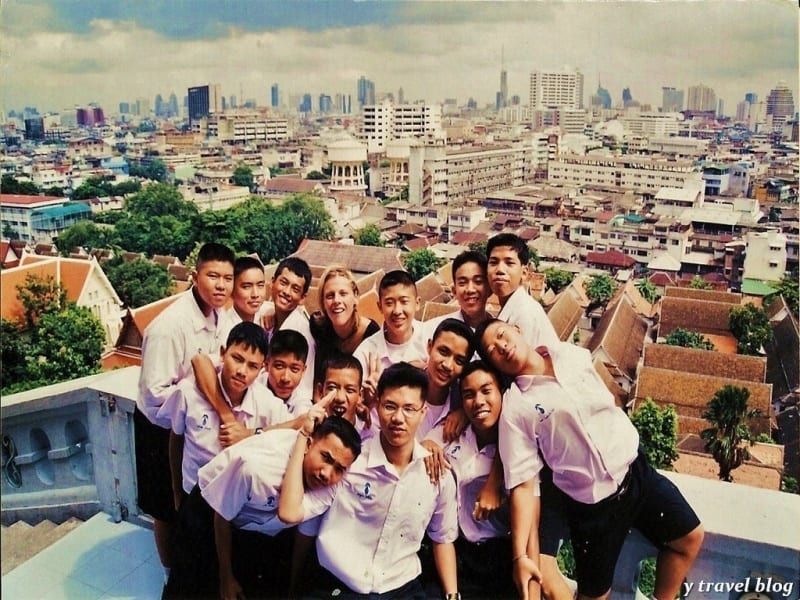
Teaching English is a great way for non-qualified teachers to teach around the world. It’s pretty easy, fun, and gives you the opportunity to get to know the local culture more.
If you’re doing a working holiday, you may like Global Work and Travel to help you find a job.
What Other Requirements Do You Need To Teach Overseas?

As well as having the right qualifications, you also need to pass certain checks and tick a few boxes. This is usually for visa purposes.
Police clearances
In most countries in Europe, USA, and North America, you need to get a background check done.
You will most often need to get police clearance from all areas you have taught, which makes it challenging to track down if you have taught in several countries or even states within your own country.
Before you leave each area it is probably a good idea if you can organize a police clearance to take with you just in case for future use.
Get a police clearance from your own country before you leave.
Statement of Services
A statement of service, or a document proving prior experience, is essential for securing most jobs, especially those international school jobs with higher salaries.
I did not realize I needed them and spent months chasing them up from around the world.
Not only is it useful to show your experience, but to negotiate your pay and ensure you are paid the correct amount for your years of experience.
Make sure the statement outlines dates you worked, your specific job hours per week, whether it was full or part time and if you took any leave without pay.
Sometimes, former teaching contracts are sufficient for this.
University Transcripts and Degrees
Most countries will require you to show a copy of your degree certificate and transcript.
You may need to get them certified, or sent to an official notary office in your chosen country to get verified.
Take copies of these as many places will ask for them during the certification process to allow you to teach.
References
References are really important to get from your principals as you leave each school.
Also make sure you keep any observation records conducted on you in regards to your teaching practice.
If you have not taught before then make sure you have references from your previous work experiences and placements.
Passport with two blank pages
You will need a valid passport with six months validity and two blank pages to secure your visa.
However, most teaching contracts are 12 months, so you should try to make sure your passport has over 12 months validity left, otherwise your visa will expire early and it will become a nightmare down the road.
Work visa
Most work visas are obtained through your school or language center, so rarely do you need to worry about this.
It’s worth looking up what is required for your work visa before starting your job search in your chosen country, as sometimes you are required to have a degree just for the visa.
Some countries require you to get a chest x-ray or go through a health check.
Am I Suited To Teaching Overseas?

Now you know what is required of you in terms of documentation and experience, you might be wondering whether teaching is the right path for you.
Teaching overseas is great for cultural immersion, allowing you to travel and see more of the world, and give back something valuable…but not if you aren’t suited to it.
Here are some things to consider about your personality. If you answer yes to these questions, you are suited to the teaching lifestyle.
- Do you love to learn? Can you pass that enthusiasm onto your students?
- Do you love children?
- Are you flexible?
- Are you a good student? Part of being a good teacher means you can learn well.
- Are you adaptable?
- Can you think in different ways and cater to students who also think in different ways?
- Are you accepting of different cultures and different personalities?
- Are you patient and understanding?
- Are you a hard worker?
- Do you crave new experiences?
- Are you a good communicator?
- Are you willing to learn new ways and adapt to the local culture? Are you prepared to learn some of their language and cultural traditions?
- Do you like wine? haha, yes there are some evenings you’ll need it.
Tips For Landing Those Teaching Jobs Overseas

Okay, real talk! Now you know what you need and whether or not you meet the personality traits of a good teacher, here are my top tips for securing a job as a English as a foreign language teacher.
Stack the odds in your favor
Research possible teaching positions before you leave your home country.
Organizing teaching jobs before you leave usually means you have a company assisting you in gaining the right visas and work permits.
Most interviews are done over Skype or Zoom, so you don’t need to worry about having to be in the country to do face-to-face interviews. It’s highly normal to do interviews online. In fact, I would say it is NOT normal to do them in person.
It’s easier to secure a job from within a job, so you don’t have the stress and pressure of needing a job getting in the way.
You may even get special perks if you relocate, such as free flights, accommodation included in your contract, interest free relocation loans, sign on bonuses, subsidised health care, cheap insurance and assistance with relocating – all of which I have received through various teaching assignments organized before arriving in the country.
Do thorough research on Glassdoor
There is a high demand for English language teachers, and more teaching positions are coming up all over the world.
That being said, English teachers can often be taken advantage of. There are some teaching programs that don’t offer great pay or work conditions, so look up the company on Glassdoor first.
Glassdoor allows former employees to rate a company and leave honest reviews.
Having a quick search on this site, and via your own online searching, will help you find reputable companies; if you do it right you could land a great job.
Be available at the start of the school year
Teaching is one of those professions where there is a hiring window…and then it closes. Most TEFL jobs in schools will recruit from April until July for the school year starting in August/September. There are rarely jobs that come up after that.
Language centers usually hire all year round, and have full-time and part-time positions.
If you have the added flexibility of being able to show up in a country at a moment’s notice, you have a good likelihood that you can find work teaching in a language center.
Ask for advice from other teachers if you know any – or join Facebook groups of teachers in that country, so you can hear from others who have done the same.
Ask as many questions as you need to until you feel comfortable with a decision.
Usually your own instincts are a good gauge as to whether a company is worth going with or not.
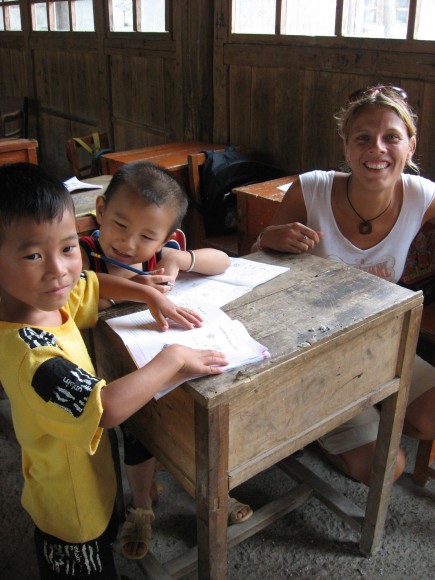
Get experience before Leaving home
A great idea is to get some experience teaching in school before you leave.
You can easily do this by doing a volunteering job placement if you can’t find any paid teaching work.
Ask your local schools. Let them know you are going to teach overseas and would like some experience.
Teachers will love the extra help and you can get to know what teaching in a classroom is really like and learn some great insider tips.
Study for the interviews
Be prepared for interviews, maybe even more than one.
These could be done over the phone, one-on-one in person, or in front of a panel.
Learn a little about the school before you attend the interview and understand the teaching culture of that country.
Be clear on why you want to work at that school and have a teaching job overseas.
Be aware of your strengths and your weaknesses as well.
Dress the part of a teacher. This means making sure you have professional attire in your suitcase.
What To Know About Teaching Overseas

Teaching in another country has its rewards, but can be incredibly challenging.
You have to learn how to think on your feet and adapt quickly.
If you are not a qualified teacher you are going to find this just that little bit extra challenging as you won’t have those skills already used in the classroom to transfer over.
Before you get your teaching job, here are some words of wisdom I can pass on to you based on my own experiences.
Teaching Fundamentals
There really isn’t much difference, albeit a few cultural ones, in how children or adults learn.
Have a firm understanding of these basics and then you should be able to adapt as you learn the new system, and curriculum.
As the owner of VIF, the company who I taught in US with said,
“You are all teachers here; you know what you are doing. It’s just a different system you need to adapt to, but the fundamentals will be the same.”
If you have a TEFL certificate or a CELTA, you will have learned the necessary tools needed to teach English abroad, you just got to apply it.
Cultural Awareness
Make sure you become aware of any cultural sensitivities you need to know about your destination.
In the Middle East (Saudi Arabia and UAE), women may be required to wear headscarfs, for example.
In Easy Asia (Japan, South Korea, Hong Kong), there is a hierarchy of respect amongst staff and you need to know your place.
In Italy or Spain, you may have siestas.
Look up cultural things to be aware of in your specific country and be prepared to adapt when you get there.
We had a week’s orientation before teaching in Thailand, which helped me know what to expect and what to avoid.
You don’t want to lose the children’s respect on the first day by doing something offensive – that is some catch up for you.
Do all you can to make your teaching experience a cultural one as well.
Learn about the local culture, which you can do through creative lessons having the students teach you.
Create lessons that allow you to share your culture with your students as well.
They will love this and will make your teaching experience all that more rewarding for you.
Teaching Duties
Teaching is time consuming.
You don’t start and finish with the school bells, there is planning, preparing, marking and many other extracurricular activities you may be asked to participate in, not to forget meetings and general administration duties.
It is not an easy job, be prepared for this. Plus your adjustment period will mean a lot of extra work.
Student Personalities
Then you get into the classroom and are faced with having to teach to multiple different levels in ability, learning styles, and personalities.
Not only this, but you will have behaviour challenges and highly unmotivated students.
All of this can lead to several glasses of wine in an evening for you!
Rely on your teaching team and others at the school to help you. Your best resource as a teacher is other teachers.
Some countries are easier than others to teach in, it all depends on your teaching role as well.
My teaching experience in Ireland was a breeze, in the US there was a lot of performance pressure, in Thailand the students were so respectful, but it was difficult to teach them anything due to lack of resources and wide gaps within the class.
Australia has challenging aspects with lack of student respect for learning and for authority.
Despite all the challenges, each has its good points as well, so focus on that.
My advice is always if you need a mental health day take it.
What About The First Day?

This may be jumping the gun a little, but I wish someone had told me this advice before my first day of teaching, so I am going to impart some wisdom to you…
Lay the Foundation
It doesn’t matter where you teach in the world or what type of job – the first day is always spent laying the foundation.
If you get this wrong you are screwed.
First thing to understand you are not their friend, you are their teacher.
Lay down your expectations, lay down the rules, but at the same time allow the children to have input into this.
Ask them:
- “What do you expect from a teacher or yourself?
- How do you think this classroom should look, sound, feel in order for you to learn optimally?
- How should we arrange our classroom in order for that to happen?
- What should our consequences be if these expectations/rules are not being followed?”
Allow them to see that the rules are there for the betterment of all.
Don’t go in being the “fun teacher” – go in hard and soften up, it will be easier to maintain respect that way.
Get to know each other
Spend the rest of the day getting to know the students and allow them to get to know you.
You are going to be their teacher and role model.
In order to trust you and respect you they need to know who you are.
I usually start with a slide show of my life or a guessing game, or something interesting.
Let them know what you hope to achieve with them throughout your time with them and what you are going to do to do your job properly.
A lot of teachers have sayings like
“You don’t smile until Easter, or a few months into the teaching contract.”
I don’t agree. I think you have to be firm, but you also have to let them know that you are a pleasant person to be around.
How Much Money Will You Make Teaching Overseas?
The question everyone wants to know and the most difficult to answer as every country is different and it all depends on the job.
Usually you will find teaching work is relatively well paid compared to other possible options (although I firmly stand by the fact that teachers are severely underpaid regardless).
You are usually going to get paid more in international schools and private schools rather than public, business English or private tuition.
Teaching will generally pay you enough to live off with some left over for travel.
But, it depends on what you are like for saving and spending of course!!
Teaching does allow you plenty of holiday time to go travelling.
Just bear in mind you may have to do a lot of after hours throughout the year in order for you to be able to take all that time for travel and be up-to date with your programming, planning and marking.
Final Thoughts
Teaching around the world is a fantastic way to travel long term.
It has allowed me to learn a lot about myself and my limits, as well as given me a career that has gifted me lifelong memories.
It has gotten me around the world for 14 years, and I’ve made some life-long friendships.
I hope these tips help you to land your own teaching job. If you have any more questions, feel free to reach out to me in the comments and I’ll be happy to share my experience.
More Teaching Abroad Tips
Need more inspiration about moving abroad and teaching overseas? Here are some other helpful guides…
- 13 Things To Prepare Before Moving Abroad
- How To Choose A Spanish School In Guatemala
- The Working Holiday Australia Visa: All You Need To Know
- My Experiences Teaching Overseas (5 countries)
Are you thinking about teaching overseas? Where in the world would you teach? Let us know in the comments.
