

This post may contain affiliate links. We may receive a small commission, if you make a purchase. Read Disclosure.
Flinders Ranges National Park, or Ikara to the Adnyamathanha people, the traditional owners of this land, is one of our favourite Outback destinations in Australia.
Ikara is the traditional name for the region the national park encompasses and it means “Meeting Place.”
You’ll quickly learn how this name came about and how the Wilpena Pound – the drawcard to the park – was formed when you visit.
Known for its rugged mountain landscapes and rich cultural heritage, Ikara-Flinders Ranges National Park is the perfect place to go to for a short walk through the craggy gorges or to simply admire the natural landscapes.
On top of that, it’s known for its abundant wildlife and aromatic wildflowers, which are particularly beautiful in Spring.
If you’re thinking of visiting Flinders Ranges National Park and not sure what there is to see and do or how to visit, this guide will tell you everything you need to know.
About Ikara (Flinders Ranges National Park)
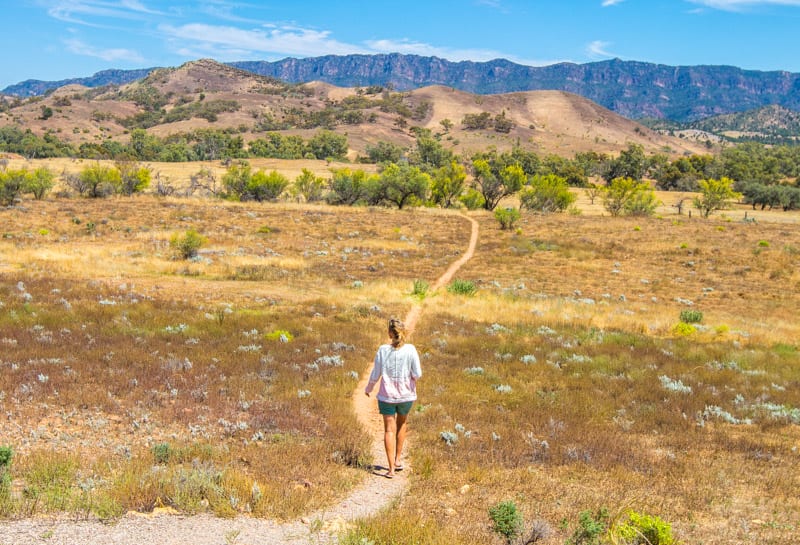
Ikara Flinders Ranges NP is 95,000 hectares of rugged mountain landscapes and rocky gorges, which are filled with impressive geological features.
It’s a popular place to go for quiet walking trails, to go birdwatching, or to just unwind in natural beauty.
It’s also known for its abundance of wildlife. We were driving out of the park, and a kangaroo bounced across the road in a fitting farewell.
Although roos are common in Australia, they’re outnumbered in Flinders Ranges by the emus. It’s the most I’ve seen in Australia.
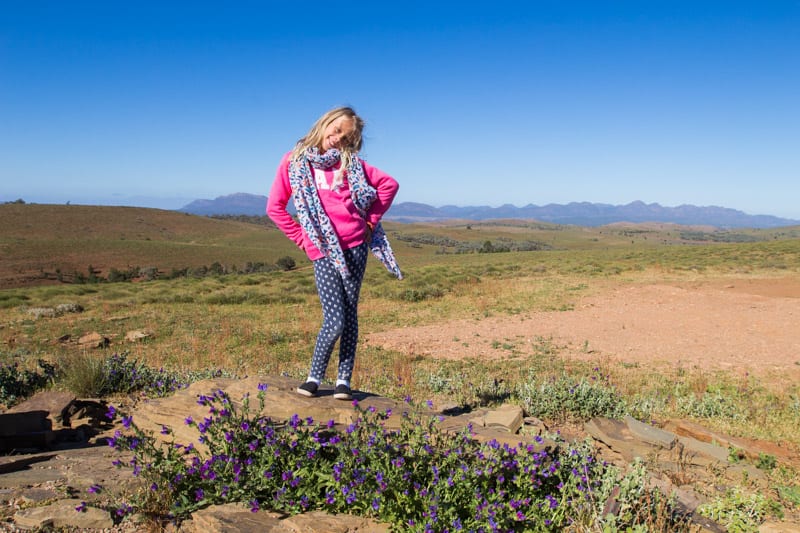
The Pappas roam camouflaged through the scrub and the noxious purple-flowered weeds, their trail of chicks following.

The flowers may be toxic to the land, but they sure aren’t toxic to the eye.
The aptly named Patterson’s Curse add vibrancy to the foreground of a landscape muted in brown and green and the soft pastel reds and oranges of the cliffs.
On our visit, it was the greenest it’s been in over 40 years!
How many days do you need in the Flinders Ranges?

The ideal number of days to spend in the Flinders Ranges National Park is four days, as this gives you time to see the gorges, learn about the heritage, and go on a few walking trails.
We spent three days in the park and we wish we had just one more day to really soak in the beauty.
What is the best month to visit the Flinders Ranges?
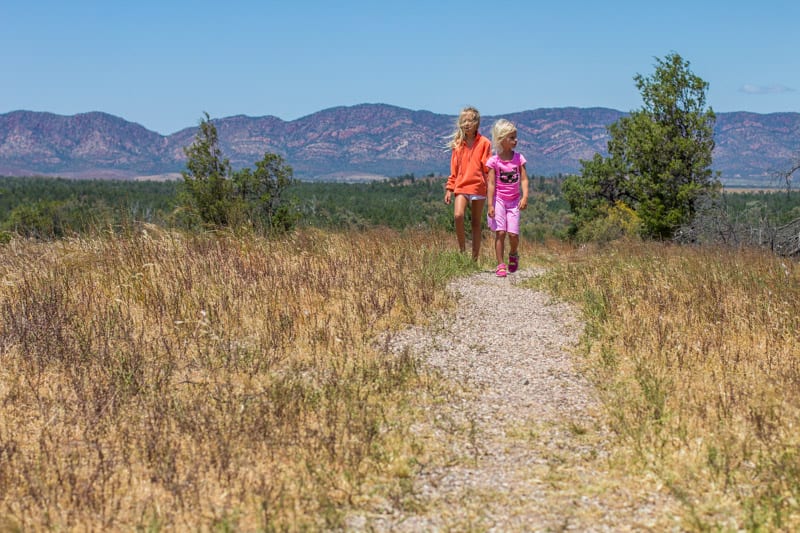
The best time to visit the Flinders Ranges is in Spring when the wildflowers are in full bloom.
From September to November, the national park is awash in pinks and purples as the floor is carpeted in hundreds of species of wildflowers. October is the busiest month as its when the flowers are at their most colorful.
The summer months are not the best time to visit, as it can get unbelievably hot in the park, and some trails are even closed due to risk of bushfires.
The cooler months of April to June are ideal for trekking, as it’s cool but not wet.
The winter is the wettest time to visit, so you can expect some rain between June and August.
Things To Do In Flinders Ranges National Park
Let’s move forward as to what you can do and experience here.
1. Admire the viewpoints in Ikara Flinders Ranges National Park
With a park as beautiful as the Ikara Flinders Ranges, you’re going to want to spend as much time as possible soaking up the views.
Here are our favourite viewpoints in the park:
Rawnsley Lookout
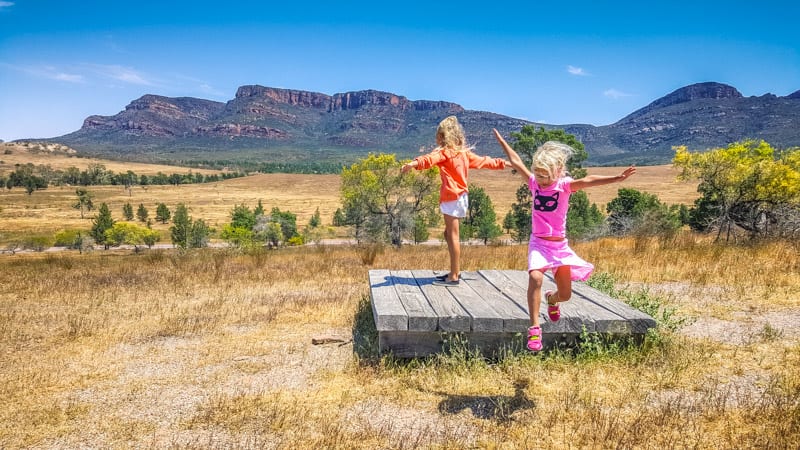
Rawnsley Lookout is about 15km south of Wilpena Pound as you drive in from Hawker.
There are gorgeous views of Rawnsley Bluff, which are amazing cliff formations near Wilpena Pound. Sunrise is meant to be when it really lights up.
It was here that I captured one of my favourite photos from the trip of my girls!
Sunset at Stokes Hill Lookout
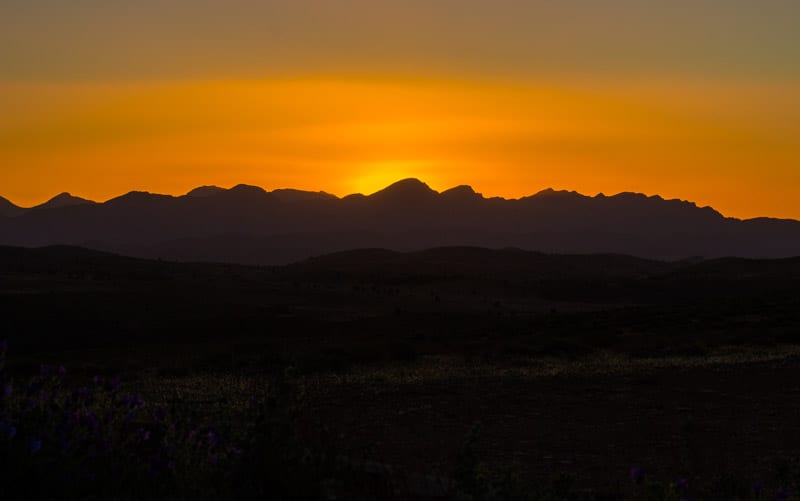
There’s nothing I love more than an Outback sunset and a glass of bubbly. Stokes Hills Lookout is an excellent vantage point looking out over the Wilpena Pound wall as the sun sets behind it.
It puts the wow in shadow. Sunrise would be extraordinary up here as the sun would be lighting up the
Sunrise would be remarkable up here as the sun would be lighting up the pound wall in those amazing pastel colours.
We joined the Sunset Spectacular tour from the resort.
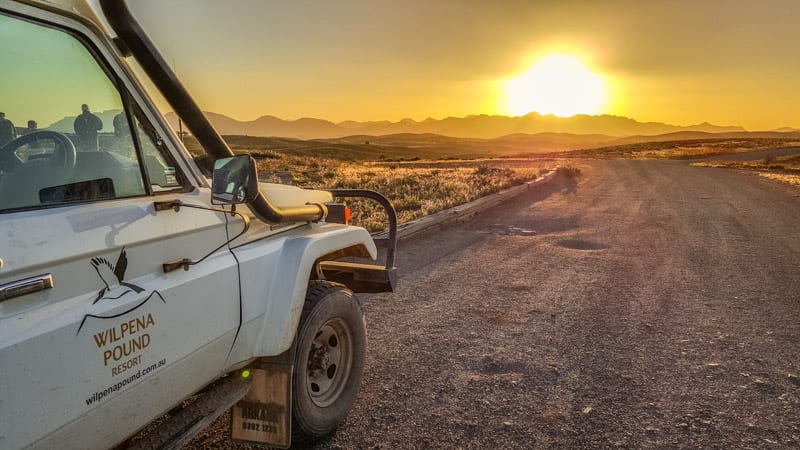
Don’t forget to look behind you while up there, the views of the ranges are just as good.
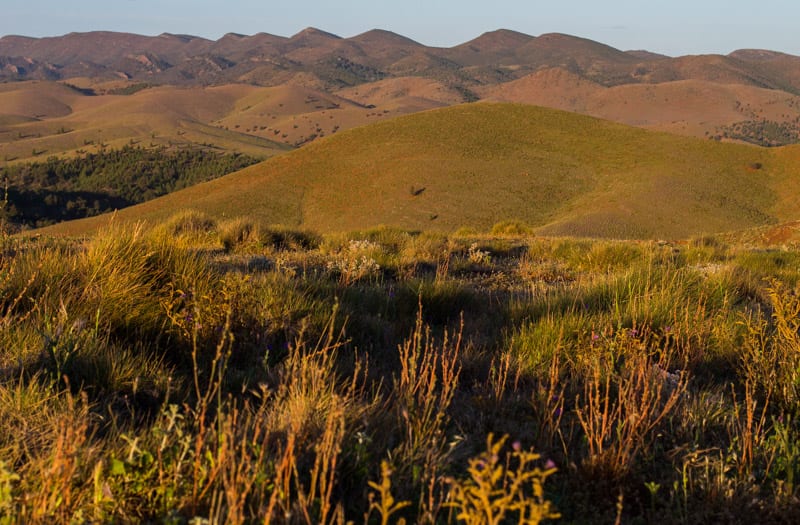
Razorback Lookout
Razorback Lookout has to be one of the prettiest panoramic views I’ve ever seen.
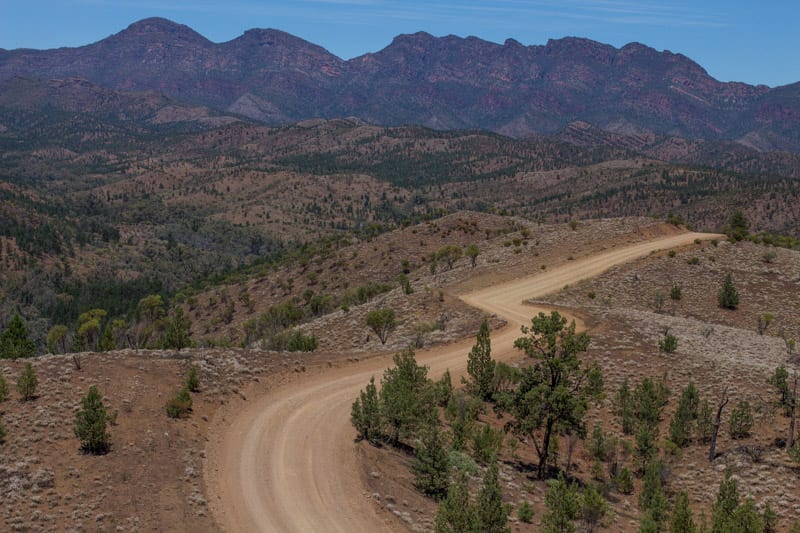
While here, our guide, Jimmy told us stories of how he would camp here when he was young with his grandfather.
It was beautiful to watch his eyes light up as he shared special memories of his childhood. I can only imagine how grounded you’d be with this as your backyard.
2. Take a gorges tour of Flinders Ranges National Park
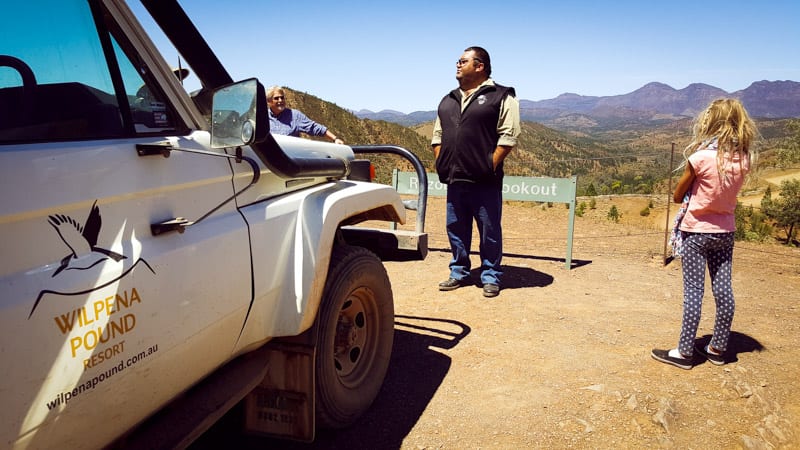
We experienced the following areas on the Time Travel and Gorgeous Gorges tours from Wilpena Pound Resort.
Jimmy, our guide, gave an excellent and thorough insight into the area and his culture.
We explored a corridor of time tracing more than 100 million year geological history into the peaceful tree-lined gorges.
It was a half day tour, which included a yummy cake and strawberries and cream morning tea break in the gorge.


You can do a longer day that incorporates this tour with a visit to the Prairie Hotel to feast on feral food and Parachilna Gorge, both of which we had many people recommend we do.
Something to come back for!
Bunyeroo Gorge
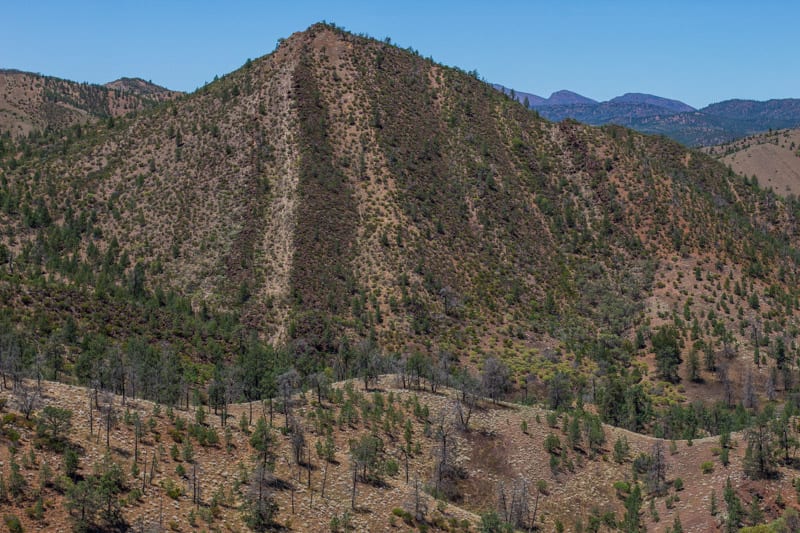
The Bunyeroo Scenic Drive is a great drive with spectacular views and a trip through the gorge itself.
The drive through the gorge is a narrow, winding on rough terrain driving on gravel and rocky roads crossing several creeks.
The scenery is beautiful with giant river gums and ghost gums along the creek beds and views to the Wilpena Pound.
This drive leads you to the spectacular Razorback Lookout as mentioned above.
Brachina Gorge
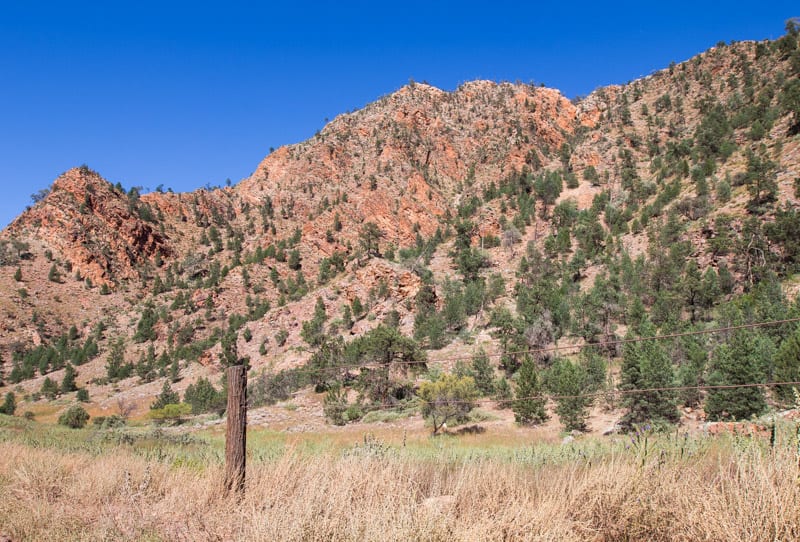
There’s a 20km self-guided Geological Trail through Brachina Gorge that passes through 650 million years of earth history. It’s pretty incredible.
It’s best to travel the trail from East to West. Detailed interpretive signage is positioned along the route providing an insight into past climates, the formation of the ranges and the evolution of early forms of life.
We enjoyed stopping to look at the imprints of stromatolites, some of the earliest forms of life ever to appear on earth.
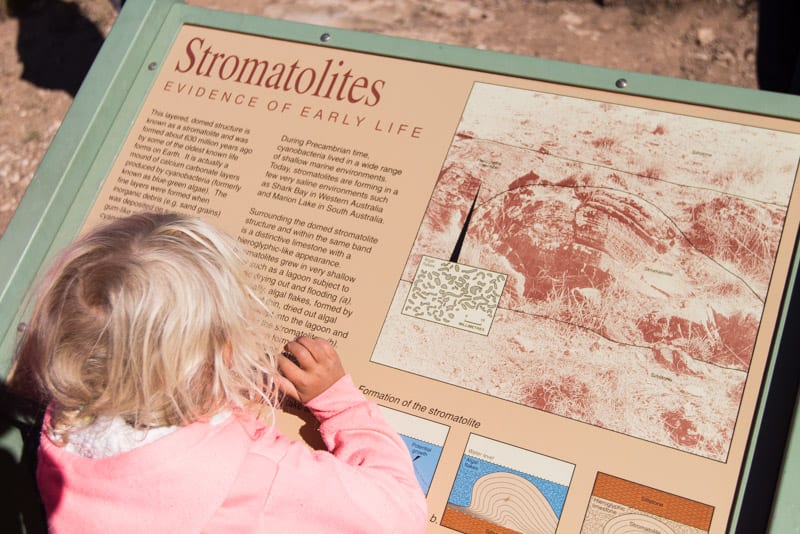
Brachina Creek winds through a colourful canyon of quartzite bluffs, among the toughest rocks in the Flinders.
One thing that stands out when you arrive in Flinders are the pine trees standing amongst the tall river gums sucking up all the water.
My initial thought was they had been planted by the pastoralists, but Jimmy informs us they are in fact native and serve some important purposes, one being to keep the termites away.
The Outback never fails to surprise and delight.
Keep a look out for the rare and endangered Yellow Footed Rock Wallaby.
You’ll see them in the early morning and late afternoon as they soak up the warm sun. They played a great game of hide and seek while we were there!
Parachilna Gorge
Located on the west side of the Flinders Ranges, Parachilna Gorge is one of the most dramatic gorges in the park.
It’s characterised by the creek, Parachilna Creek, which runs through the center.
The gorge is also reached by the Heysen Range walking trail.
We didn’t have time to see this on our tour, but we hear it’s beautiful and worth checking out. Perhaps if we had one extra day!
3. Go bush walking in Wilpena Pound
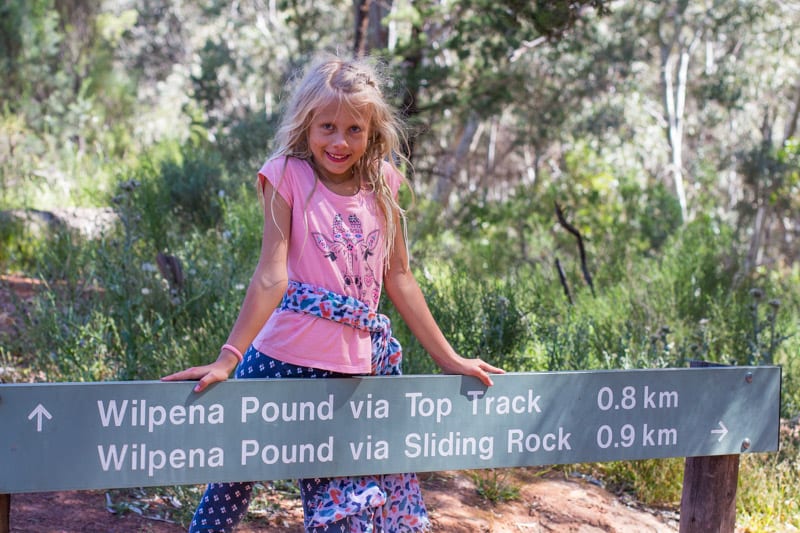
Wilpena Pound is a magnificent natural amphitheatre and the centrepiece of the Ikara Flinders Ranges National Park.
Wilpena Pound is a spiritual place for the Adnyamathanha people.
Tribal law is important within the Indigenous way of life. It’s law that the traditional owners do not enter the pound. It’s bad for their spiritual juju if they do.
There are a couple of walks you can take into the pound and to lookout points.
We also heard rave reviews about the scenic flight over the pound itself and how incredible it is to see it from the air.
Jimmy tells us you can actually see the Dreamtime story creation from up there.
Here are a couple of the walks we did that were okay for the girls
Hills Homestead/Wangarra Lookout

It’s a 6.6km return to the Hills Homestead. It’s a flat, easy, shaded and beautiful walk along the creek.
The Homestead has signs telling the story of a pioneer family who lived here. There’s also signage telling of the Dreamtime story.
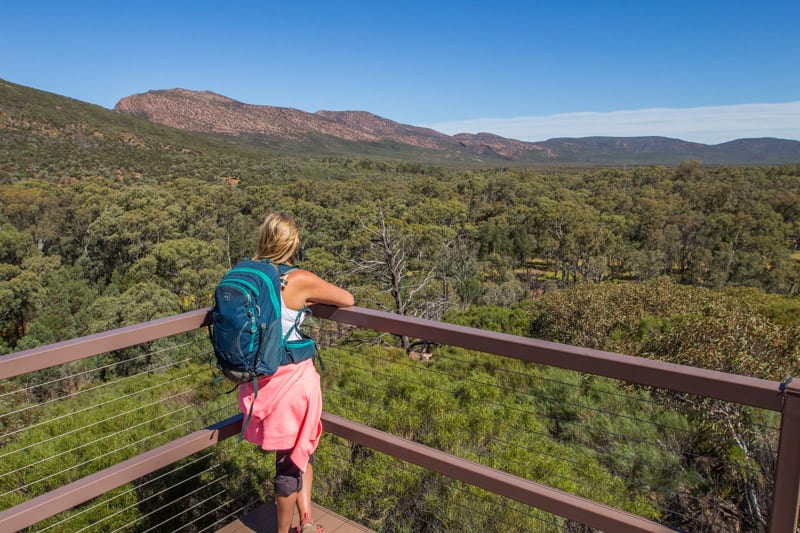
From the homestead, you can walk 300m to a lower lookout and then 500m to the higher lookout for extraordinary views into the pound.
It was fabulous to be inside the pound and see the walls of the serpent closing us in.
It took us just over 2 hours to do the walk.
Drought Busters Walk
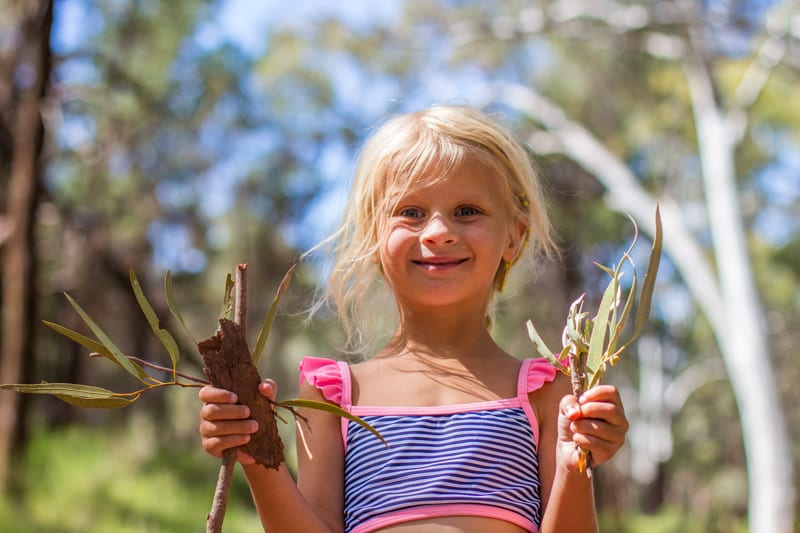
I found the Drought Busters walk fascinating to learn about the boom and bust times of the Ikara region.
You could tell we were visiting during boom times – native wildlife was prolific, there was still water in the creek, and everything was so lush and green.
This 2km loop trail has interpretative signs, meanders alongside the creek and goes slightly uphill to give you some views.
It was the first walk we did, and I instantly fell in love. Look at all these river red gums!


It’s amazing they are in the Outback. They are my favourite tree and, as keeping with my discoveries when we visited the Barossa Valley, has the most beautiful gum trees in the country.
Wilpena Station
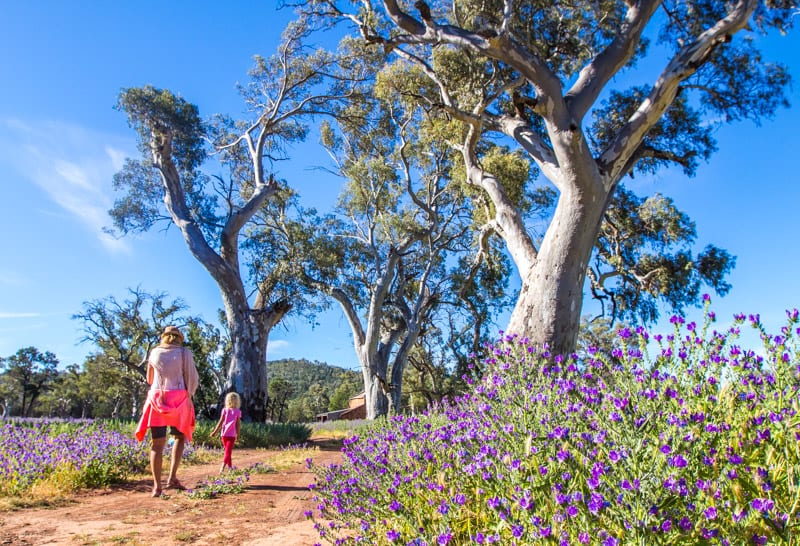
It was hard to imagine Wilpena Homestead as being anything but one of the most beautiful places to live.
We were seeing it in boom time – lush in colour and plant life. It’s a property filled with huge river red gums and views out to the ranges. It felt peaceful here.
Wilpena Station was a working cattle station for 135 years. As it was one of the most significant pastoral sites in South Australia, it’s now preserved as a historical site.
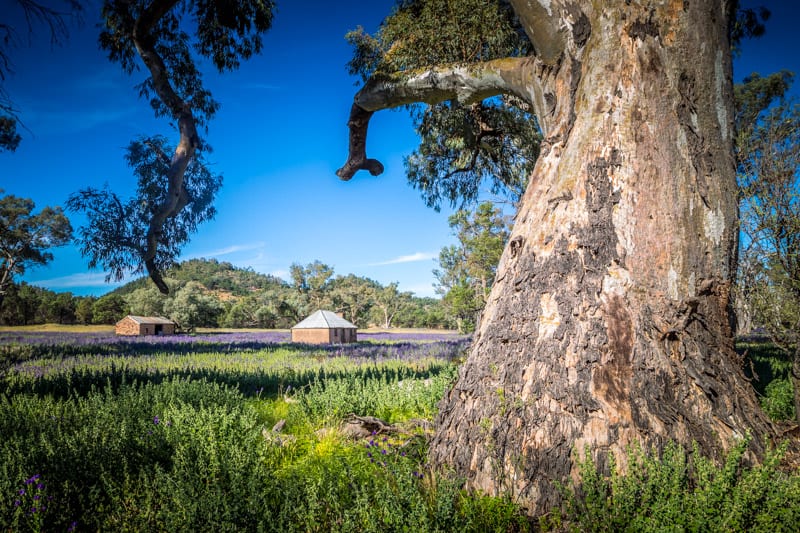
You can join a cultural walk from Wilpena Pound to learn more about the European and Indigenous history of this station.
We spent the afternoon walking around it ourselves.
The self-guided walk “Living with the Land” explores the themes of self-sufficiency, improvisation, and survival on the remote and isolated pastoral settlements of the Flinders Ranges.
I loved Ikara, the circular ground sculpture that pays tribute to the Aboriginal people’s contribution to pastoralism over the last century.
4. Visit the Sacred Canyon (Yura Mulka)
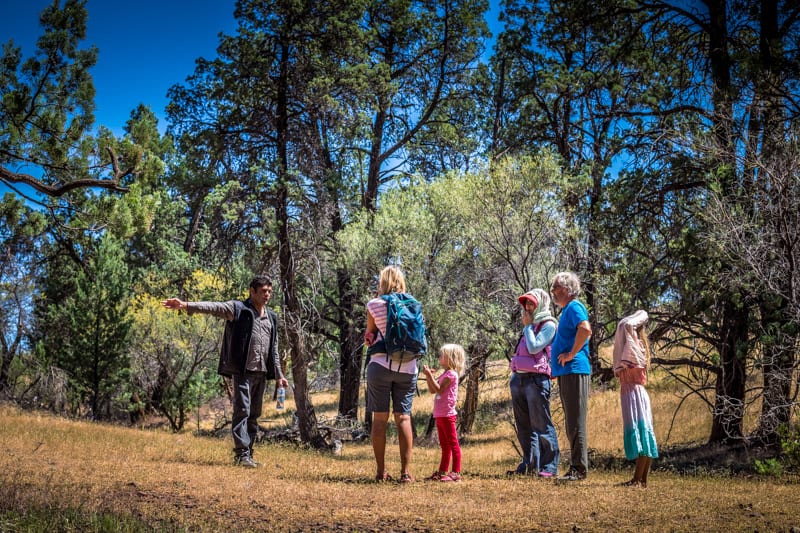
Sacred Canyon is just outside the borders of the National Park on private property. We joined Terence on a cultural tour from the Wilpena Pound Visitor Centre.
Sacred Canyon is where the Adnyamathanha people carved symbols in the rock instead of painting them.


Terence led us through the gorge and explained to us what the different symbols on the canyon walls meant and what it told us about the people who lived in the area.
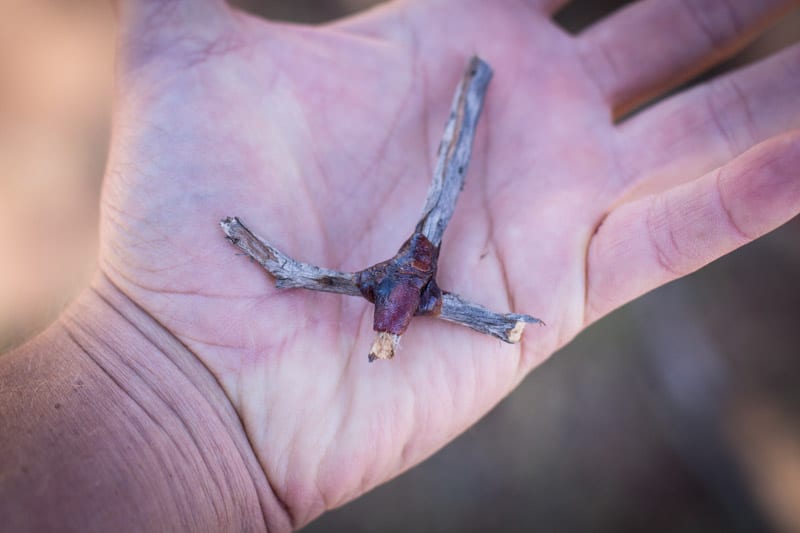
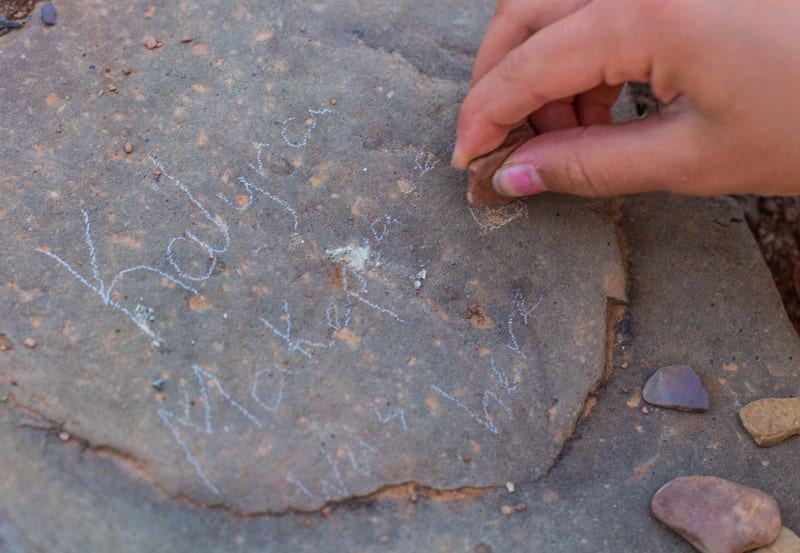
Terence also showed us how weapons were repaired using the sap from the pine trees and how there’s never a reason to say you have nothing to do.
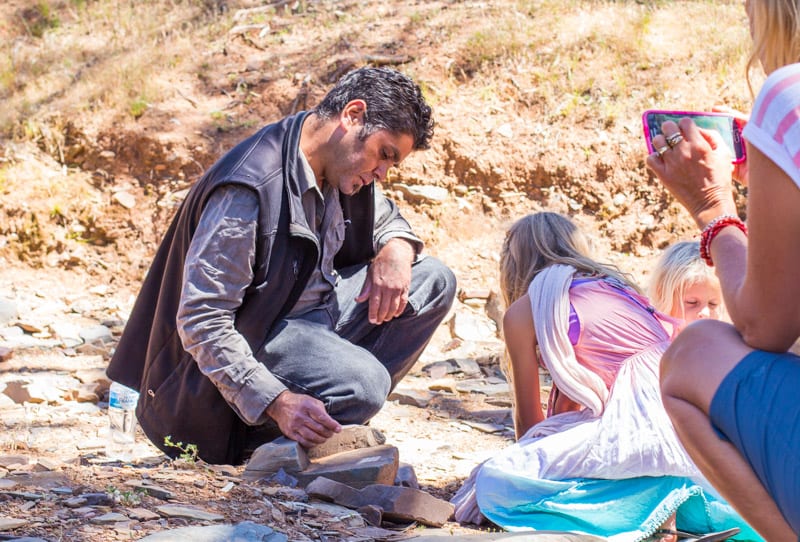
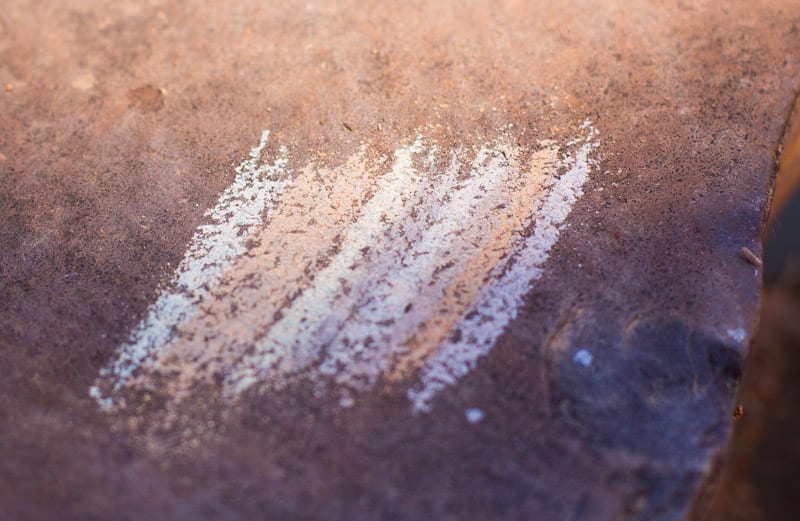
We sat in the dry creek bed with small stones of various colours shading designs into other rocks. It was a beautiful exchange between him and the girls.
5. See Akurra Adnya (Arkaroo Rock)
One of the most significant rock art pieces in the park is Akurra Adnya, also known as Arkaroo Rock, which is an Adnyamathanha painting site that brings the Yura Muda (stories) to life.
According to legend, two giant snakes, or Akurra, encircled the tribe locking them in after two youths disobeyed tribal law to kill the young Akurra.
6. Go mountain biking The Mawson Trail
For the adventurous traveler, the Ikara-Flinders Ranges National Park has some great mountain biking opportunities.
The stunning long-distance trail, The Mawson Trail, uses many fire access trails and has spectacular views. It’s accessible from Wilpena, Yanyanna and Trezona.
7. Learn about mining history at Appealinna ruins
The Appealinna ruins are the remains of a homestead that once belonged to Joseph Wills, a local pastoralist in the 1850s.
He built the homestead and stockyard next to the creek, opposite a former mining settlement.
You can reach the ruins by walking 1km north of the Wirrealpa turn-off on the Blinman Road.
Getting Around Ikara Flinders Ranges National Park
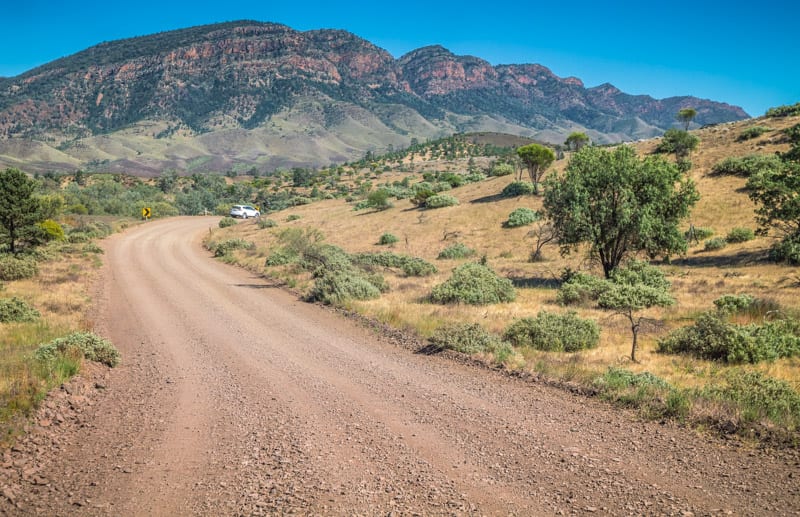
There are sealed roads throughout the park to get you to some of the main areas. However, many of the sites we’ve mentioned are accessible by unsealed road, so you will need a four-wheel drive vehicle.
We could not access these areas with our motorhome and so experienced them on a guided tour from the Wilpena Pound Resort instead.
Even if you do have a 4WD, I highly recommend joining at least one of the Indigenous guided tours from the resort.
We loved our time with Michael, Jimmy, and Terence. We learned so much more about the area – both from a scientific, geological perspective and through the stories of the Dreamtime and Adnyamathanha culture.
Where To Stay In Flinders Ranges National Park
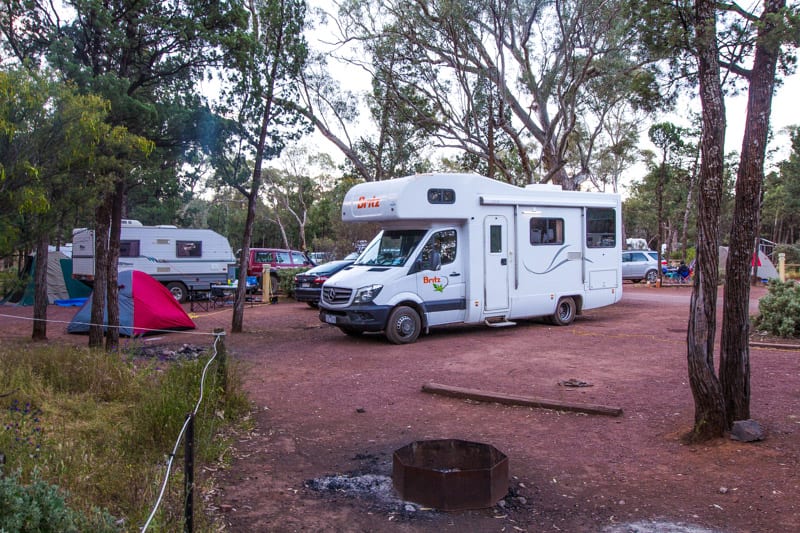
There are 10 bush camping spots all around the National Park, ranging in accessibility and size. Some require a 4WD to get to, so be sure to check the website to see which site is best suited for you before you visit.
If you don’t want to camp, you can stay at Wilpena Pound Resort to have a little more comfort and amenities.
The resort has powered and unpowered sites as well as motel rooms, and Ikari safari tents. There is also a restaurant if you don’t plan on self-catering.
We camped in a powered site and loved waking up in the natural bush setting with kangaroos and emus on our doorstep.
Be sure to join the Welcome to Country at the flag pole which is held every evening at 6 pm.
We stayed for three nights. I could have stayed a lot longer and enjoyed days hiking interspersed with relaxing. That scenery is enough to happy my heart.
Final Thoughts
The Outback is where Australia really leaves its mark for me.
It encapsulates so much about my country that I love.
No other place in Australia makes me feel more at home and like I live in the most special continent on Earth.
I am so grateful that we had this experience in Ikara Flinders National Park before we departed for the US. My soul needed one more Outback experience to take with me.
I adored my time in Ikara. It is exquisitely beautiful. Ancient. Timeless. It holds a spiritual power that can never be captured by words, photographs, or film – even though we tried.
We stood among hills that are said to be the oldest in the world. We looked at fossils and landscape that dated 630 million years ago. Can you imagine the stories they hold?
I felt so blessed to be about to walk upon this land, but so blessed to experience it with an Adnyamathanha guide.
He was welcoming, open, gentle, kind, and shared so much about the land, its secrets, and culture.
I was especially grateful that the girls were there to absorb all of that as well.
I felt so much sadness though at the history of white Australia treatment of the traditional owner of our land.
I don’t wish to go into it in this post, because as Michael said as we gazed upon the setting sun over Wilpena Pound:
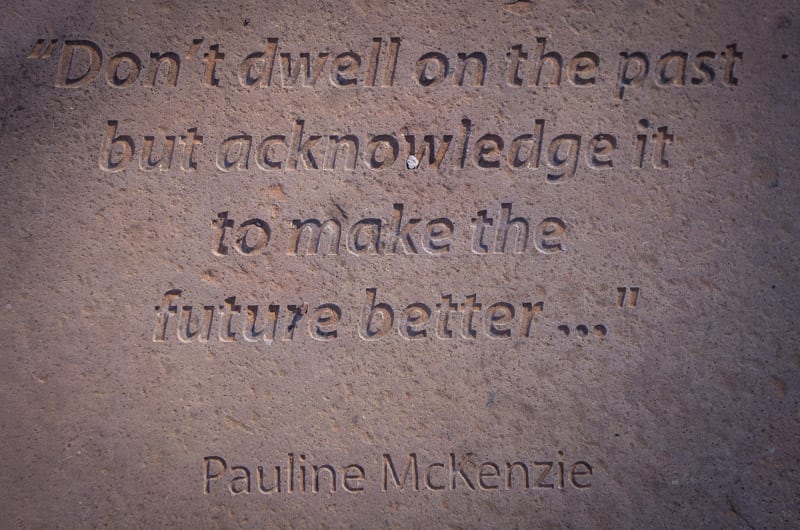
“We Adnyamathanha people are a forward looking people. We don’t like to look back and dwell on the past. We want to work together for a better future.”
I agree. My ears, eyes, and heart are open to listening and learning and collaborating.
I mention it briefly as I loved this tile I saw at the memorial in the Wilpena Pound homestead:
Flinders Ranges National Park Video
Watch our time at the Flinders Ranges National Park in this video:
More South Australia Travel Tips
Need more inspiration for visiting South Australia? Here are some other useful guides…
- 4 Day Kangaroo Island Road Trip Itinerary
- Things to do on the Eyre Peninsula
- Food and wine experiences in the Barossa Valley
- Romantic Date Ideas For Barossa Valley & Adelaide Hills
- Things To Do In Barossa Valley & Adelaide Hills
- Exciting Things To Do In Coober Pedy, South Australia
- Is Adelaide Worth Visiting? 11 Reasons To Say Yes!
- Exciting Things to Do in Adelaide
- Guide To An Adelaide Central Market Food Tour
Pin To Save On Pinterest
What are you most looking forward to on a visit to Flinders Ranges National Park? Let us know in the comments.
